- Reclamation
- California-Great Basin
- Programs and Activities / North-to-South Water Transfers
North-to-South Water Transfers Program
Project Background
Hydrologic conditions, climatic variability, consumptive use within the watershed, and regulatory requirements for operation of water projects commonly affect water supply availability in California. This variability strains water supplies, making advance planning for water shortages necessary and routine. In the past decades, water entities have been implementing water transfers to supplement available water supplies to serve existing demands.
Reclamation manages the Central Valley Project which includes storage in reservoirs (such as Shasta, Folsom, and Trinity reservoirs) and diversion pumps in the Delta to deliver water to users in the San Joaquin Valley and San Francisco Bay area. When these users experience water shortages, they may look to water transfers to help reduce potential impacts of those shortages. Transfers are allowed under California State law and under Federal law.
Final Environmental Assessment/Initial Study
Reclamation proposed to facilitate and approve, in accordance with law, policy, rules, regulations and contracts, then in effect, the voluntary transfer of water from willing Sellers located primarily upstream of the Delta, to willing Buyers located primarily south of the Delta, and in the 2026-2027 North to South Water Transfers Environmental Assessment/Initial Study.
Environmental Impact Statement/Environmental Impact Report
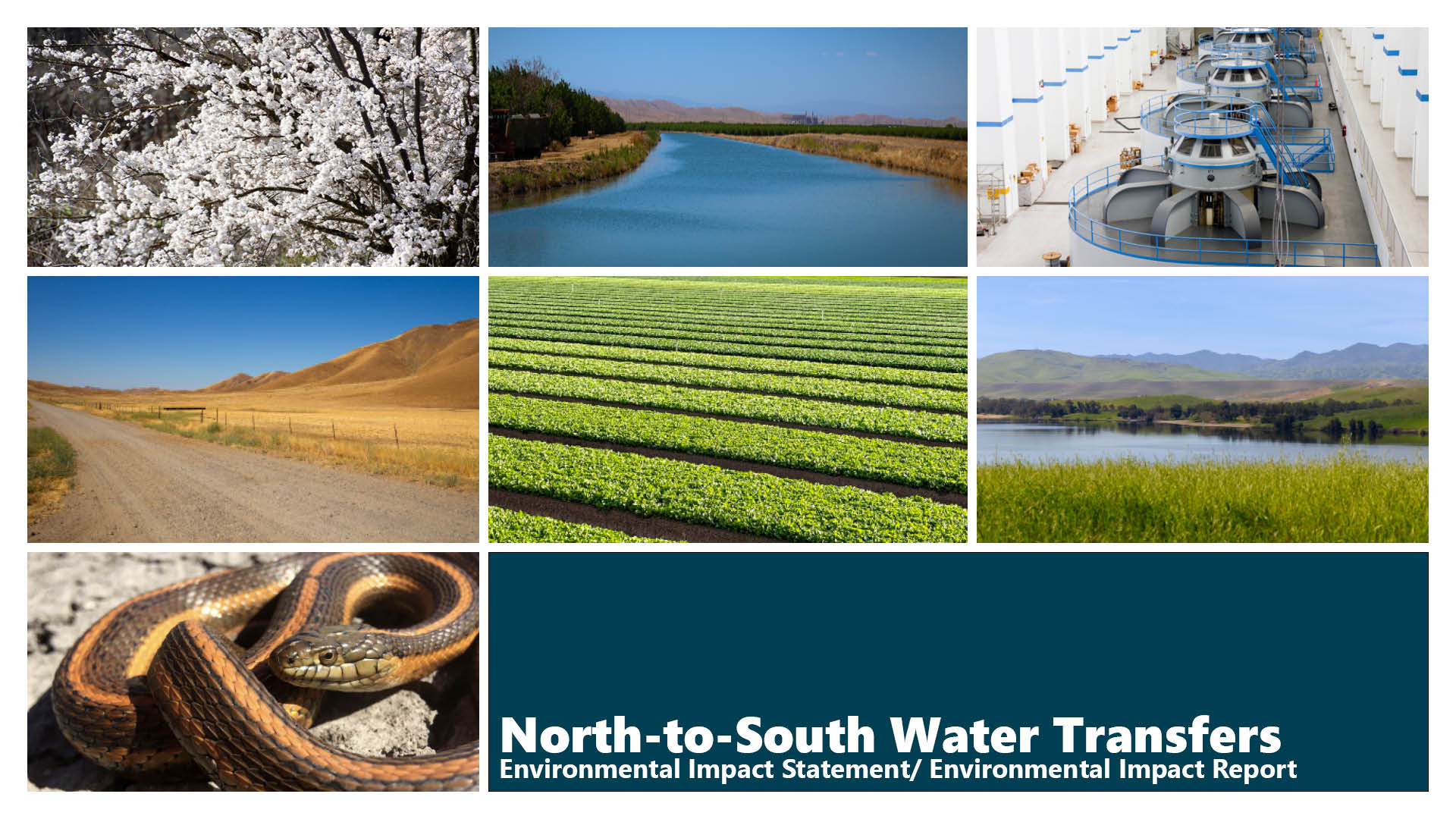
Reclamation and San Luis & Delta-Mendota Water Authority are completing a joint Environmental Impact Statement/Environmental Impact Report to provide National Environmental Policy Act and California Environmental Quality Act compliance for water transfers, which would be approved on an annual basis. Reclamation is serving as the Lead Agency under NEPA and SLDMWA is the Lead Agency under CEQA. The EIS/EIR addresses transfers of Central Valley Project and non-CVP water supplies that require use of CVP or State Water Project facilities to convey the transferred water. Water transfers may occur through various methods, including, but not limited to, groundwater substitution and cropland idling.
Public Scoping Meetings
Public scoping meetings (two virtual and one in-person) are scheduled to inform interested parties about the project and gather input on the Environmental Impact Statement scope and alternatives under consideration.
Meeting dates/times:
Virtual
9/17 - 3:00 p.m. - 5:00 p.m. - Zoom Meeting Link
9/18 - 6:00 p.m. - 8:00 p.m. - Zoom Meeting Link
In-Person
10/3 - 10:00 a.m. - 12:00 p.m. - Café Conference Rooms: C1001 and C1002 - Sacramento Federal Building Cottage Way 2800 Cottage Way, Sacramento, CA 95825.
Reclamation will accept written comments on the proposed content and scope of the Environmental Impact Statement through Oct. 3. Comments may be submitted by mail (postmarked by Oct. 3) or email to: Nicole Johnson
Bureau of Reclamation
2800 Cottage Way
Sacramento, CA 95825
