


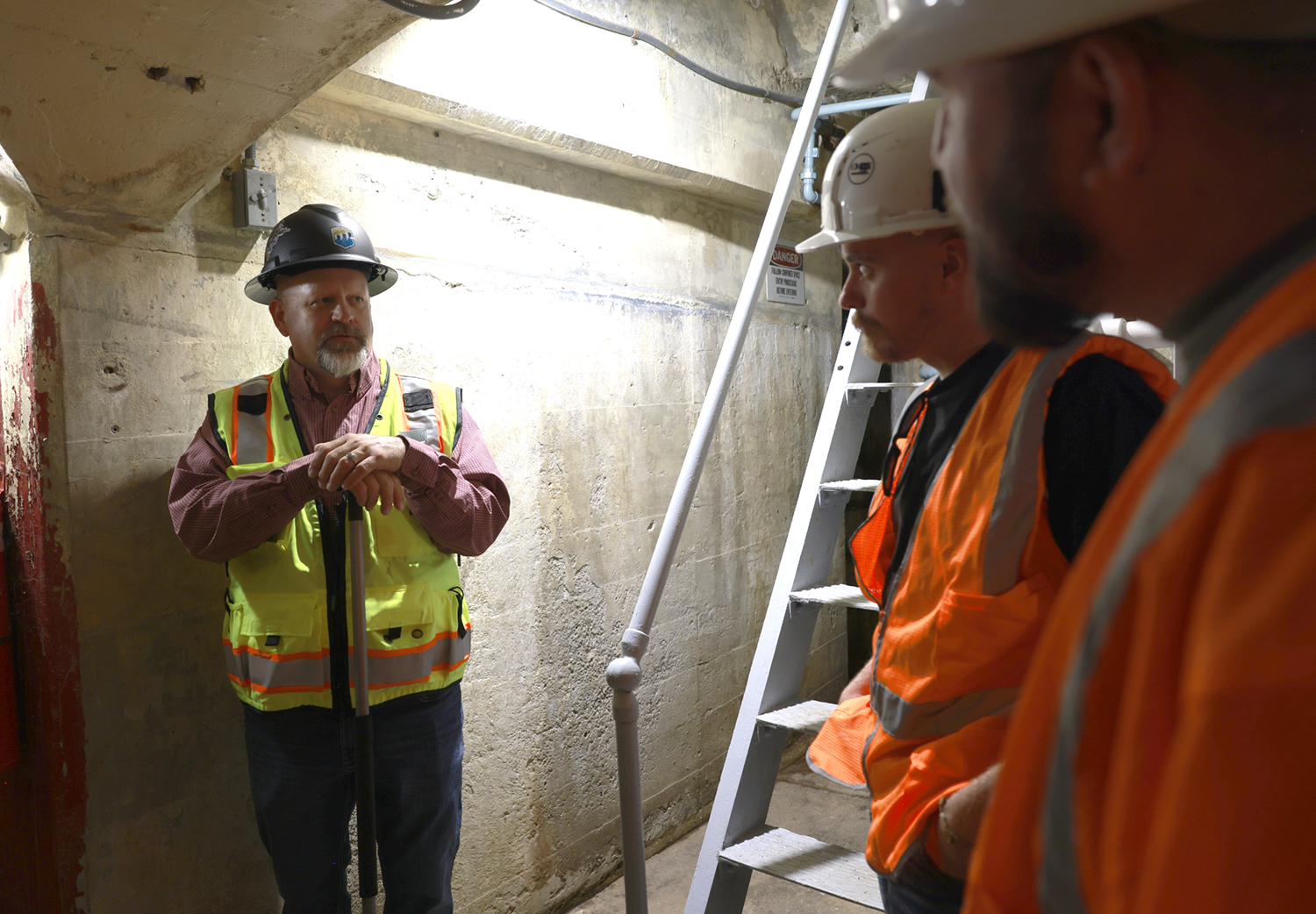
 Middle Snake Field Office Facility Manager Steve Crawford, left, briefs Owyhee Irrigation District representatives at Black Canyon Diversion Dam.
BOISE, Idaho — Project managers from Columbia-Pacific Northwest Region’s Snake River Area Office (SRAO) hosted a regional space holder site visit Oct. 21-22 at selected Middle Snake facilities. The visit gave water managers an opportunity to gain a deeper understanding of Bureau of Reclamation operations, maintenance responsibilities, recreation management, environmental stewardship and major infrastructure investments in southwest Idaho.
“The event provided a valuable opportunity for participants to exchange knowledge, strengthen partnerships, and gain a greater appreciation for the investments being made to ensure the continued reliability of Reclamation facilities for future generations,” said Ryan Bliss, SRAO Operations and Maintenance and Technical Services Manager.
The first day began at the SRAO in Boise, where subject matter experts discussed best practices for grant writing, environmental compliance considerations, use authorizations and crossing agreements, and approaches to addressing trespass issues on Reclamation-managed lands and facilities. The sessions provided participants with practical guidance and a broader understanding of the regulatory and operational requirements associated with maintaining Reclamation infrastructure.
At Black Canyon Diversion Dam, attendees learned about recreation management, including park operations, recreation policies and maintenance activities that support public access and visitor experiences. Participants also received an update on the facility's switchyard project before touring the dam’s powerplant to see firsthand how the facility contributes to water delivery and hydropower generation.
For Emmett Irrigation District Manager Carl Hayes, the site visits offered an opportunity to strengthen relationships and maintain transparency between Reclamation and its partners.
“It’s a great opportunity to come out here with Reclamation staff to get some face time, highlight Reclamation’s mission and share our goals,” Hayes said. “Some of the best things about these types of visits is that there are no surprises — we like to keep things on track and not have anything come out of the blue or not have anything come up on either side that surprises Reclamation and the shareholders.”
On the second day, participants stopped at Boise River Diversion Dam, where Reclamation staff provided updates on Safety of Dams activities and ongoing infrastructure improvements, including new gates and bridge enhancements designed to support long-term reliability and operational efficiency.
The visit concluded at Anderson Ranch Dam, where participants received briefings on major modernization efforts underway at the facility, including its dam raise project, which is increasing water storage capacity, and a runner replacement project aimed at improving hydropower performance. A guided tour of the dam and powerplant offered attendees an up-close look at the engineering and operational work that supports water management and renewable energy production in the region.
Collectively, the site visit showcased the breadth of Reclamation's mission and the collaboration required to operate, maintain and improve critical water and power infrastructure throughout the Snake River Basin.
