


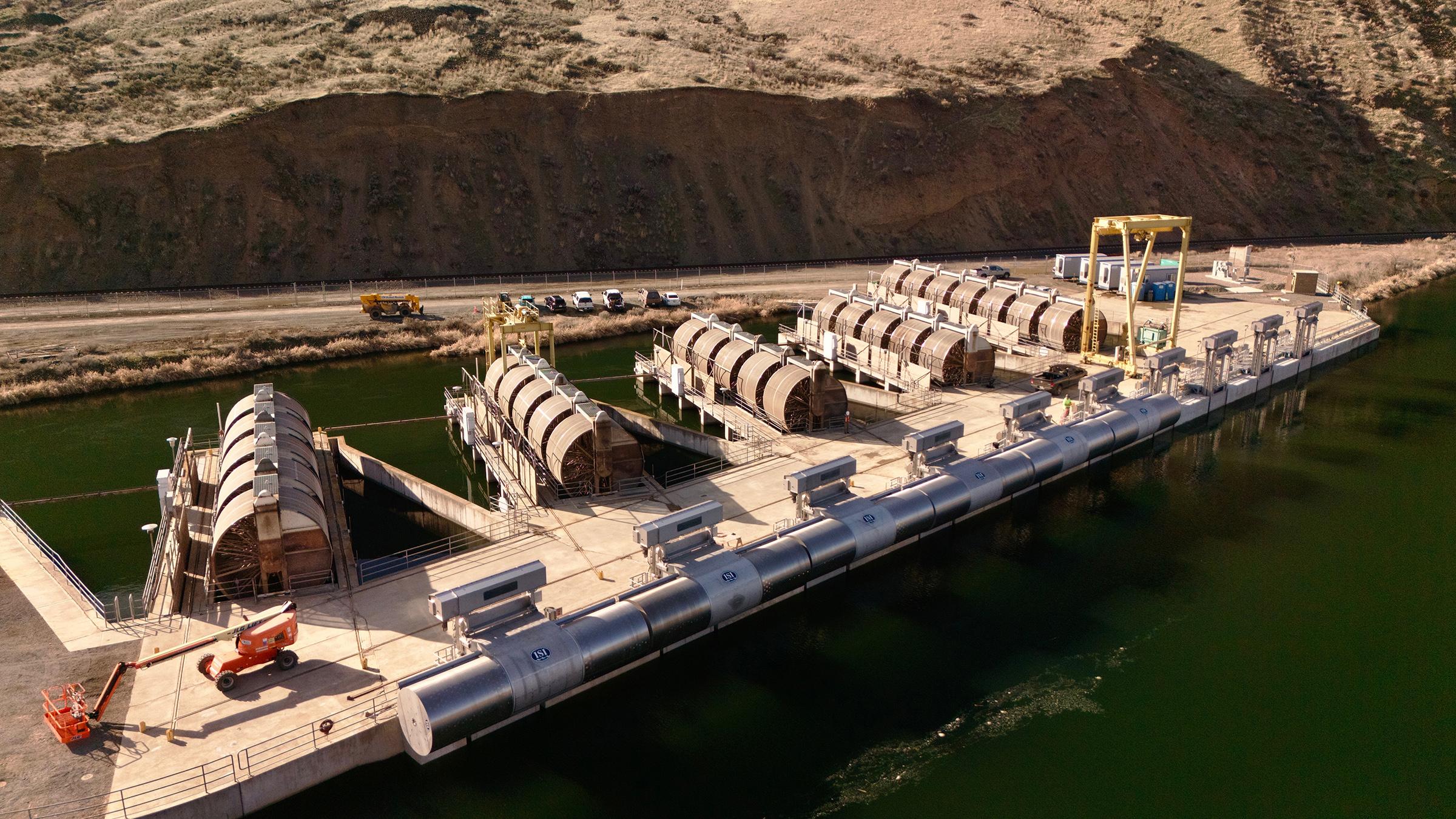
 Roza Diversion Dam fish screens
After years of planning, engineering, and collaboration, the Bureau of Reclamation and its partners successfully completed the Roza Diversion Dam Fish Screen Modifications project—a milestone achievement for irrigation efficiency, power generation, and fish survival in the Yakima Basin and the largest installation of this style fish screen anywhere in the world.
Constructed between 1936 and 1939, the Roza Canal stretches 95 miles, delivering water to the Roza Irrigation District and supporting approximately 72,000 acres of high-value orchard crops. It also generates about 63,000 megawatt-hours of hydropower annually. Now, thanks to this ambitious upgrade, the canal is equipped with a state-of-the-art fish screening system that sets a new standard.
“Completing an installation of this type of screen at this scale was no small task,” said Project Manager Tom Appler. According to Appler, designers and engineers overcame significant challenges: navigating a narrow historic bridge, working in a river with fluctuating water levels, and meeting tight seasonal deadlines during harsh Yakima Canyon winters.
The previous screens, installed in the mid-1980s, no longer met National Marine Fisheries Service criteria for water flow speeds and posed risks to juvenile fish. Their design also required a fish bypass system that often caused delays and increased mortality. The new in-river T-screen system reduces or eliminates these issues entirely. These self-cleaning, self-baffling screens meet or exceed current fish safety standards, screen fish directly in the river rather than side channels, and remove the need for a bypass, in turn, improving fish survivability.
“The main construction was completed ahead of schedule too,” Appler said “To add to that, with the recent historic river flows that Washington state experienced in winter 2025, the Phase I screens lived up to their promise of durability. Their robust construction allowed them to survive the flooding and debris with no damage.”
This success reflects years of research and partnership. On the recommendation of a National Marine Fisheries Service engineer and with assistance from the Washington Department of Fish and Wildlife and the Yakama Nation, Reclamation identified and implemented the cutting-edge T-screen technology. The result is a system that not only protects fish but also reduces operation and maintenance costs.
Coupled with pool regulation programming changes, the new screens are expected to deliver measurable gains in fish survival at the Roza Diversion structure, helping restore ecological balance while supporting the region’s agricultural economy.


