


Five teams earn $50,000 each for innovative solutions to seal pressurized dam conduits and advance dam safety
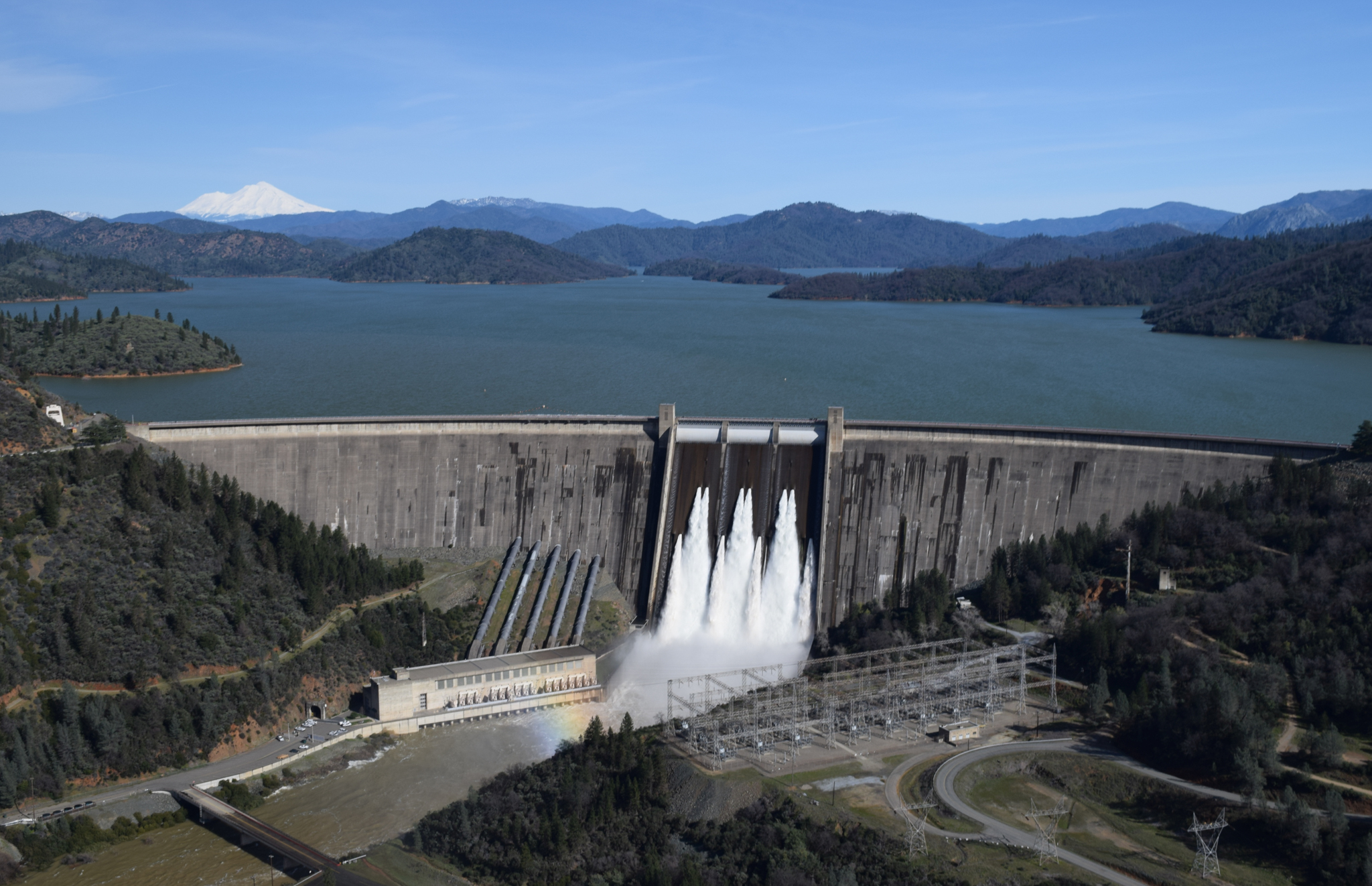 Shasta Dam releases water through its spillway as Lake Shasta rises following recent storms, with Mount Shasta visible in the distance.
DENVER — The Bureau of Reclamation announced the Phase 1 winners of the Seal Team Fix Challenge, a prize competition designed to identify innovative solutions for sealing pressurized dam conduits and strengthening dam safety across Reclamation facilities. Five teams were awarded $50,000 from the $575,000 total prize pool and will advance to the next phase of the challenge.
The Seal Team Fix Challenge looked for innovative, crowdsourced solutions to help Reclamation respond to rare but high-risk problem with its water and power systems that serve millions across the American West. If Reclamation loses control over water flow through a large pipe, an immediate solution must be implemented to halt the flow promptly, ensuring safe operations and maintenance.
Participants were asked to design a rapidly deployable solution that can be installed under pressure to temporarily seal outlet works and power penstocks, minimizing uncontrolled water releases and reducing risk to workers and downstream communities. Phase 1 winners will move on to prototype development followed by a lab-scale hydraulic demonstration.
The winning solutions represent a wide range of engineering approaches to a complex infrastructure problem.
The selected teams are:
- HYDRA – Hydraulic Dam Retention Assembly, submitted by TAB Technologies
HYDRA is a device designed to seal dam conduits in emergencies. It combines an asterisk-shaped metal anchoring system with a multilayer inflatable bladder. The anchoring system distributes the load on the dam surface, while the bladder inflates with water to stop flow. The modular design accommodates conduits from 3 to 25 feet in diameter and adapts to various geometries. - Inflated Torpedo Tubes with Ventilation, submitted by Team Venturi
This solution uses streamlined, torpedo-shaped tubes that inflate to create a low-pressure zone. Air is introduced to form a ventilated pocket, reducing water flow by replacing part of the cross-section with air. The interlocking tubes align with the water flow to form a secure, wedged seal. - HydroSeal Dynamic Multi-Flow Expanding Barrier, submitted by Full Circle Solutions
HydroSeal is a rapidly deployable inflatable tube system that seals breaches in dam conduits during emergencies or inspections. Using water’s natural flow to position flexible hoses, the system offers a portable, modular solution requiring minimal preparation and personnel. - Roller Seal Fix, submitted by Jan Beetge
This solution features a high-strength elastomeric composite capable of deployment under extreme hydrodynamic and hydrostatic pressures. It forms a high-performance seal between the elastomer and the concrete face around the valve opening, using a deployment method that dissipates high momentum and kinetic energy. - Fix the Dam Leak, submitted by Bill Rollins
Inspired by a kitchen sink drain stopper, this concept scales up the idea to seal a 25-foot diameter conduit at a depth of 200 feet, where forces can exceed 3,500 tons. The design focuses on creating a robust, industrialized version of a proven concept to ensure safety for downstream personnel.
“These innovative solutions demonstrate the power of crowdsourcing to tackle complex engineering challenges,” said Bobbi Jo Merten, Ph.D., a civil engineer at the Bureau of Reclamation’s Technical Service Center. “We’re excited to see how these concepts evolve in the next phase of the competition.”
In phase two, the winning teams will develop functional prototypes in preparation for testing in phase three.
To learn more about the Seal Team Fix Challenge and view the winning submissions, visit https://www.herox.com/SealTeamFix.
# # #
The Bureau of Reclamation is a federal agency under the U.S. Department of the Interior and is the nation's largest wholesale water supplier and second largest producer of hydroelectric power. Our facilities also provide substantial flood control, recreation opportunities, and environmental benefits.
