


Albuquerque Area Office interns help save the Rio Grande Silvery Minnow during collaborative “jiggle” event
 Reclamation Interns Ashley Bennett (left) and Lourdes Padilla (right) show off the Rio Grande Silvery Minnow eggs collected during a “jiggle” event held this spring.
By Ashley Bennett and UCB Public Affairs
Lourdes Padilla and Ashley Bennett are Individual Placements with the Rocky Mountain Youth Corps, currently completing an internship with the Bureau of Reclamation’s Albuquerque Area Office. While they assist with various projects in the office, they also get the opportunity to go into the field at least once a week for hands-on experience. These field days have included touring dams and reservoirs with project managers, observing river restoration efforts with engineers, and conducting bird surveys and fish egg collections with biologists.
One of the most memorable experiences they had this summer was participating in a three-day “jiggle” event to collect Rio Grande Silvery Minnow eggs. From April 30 to May 2, they joined a collaborative team from the Albuquerque Area Office, the U.S. Fish and Wildlife Service, and the New Mexico Ecological Services Field Office to collect silvery minnow eggs during a coordinated water release designed to stimulate spawning.
The term “jiggle” refers to a strategic release of stored reservoir water to create a pulse in the river system, mimicking natural spring runoff. This pulse helps trigger spawning behavior in the Rio Grande Silvery Minnow, a species that depends heavily on spring runoff to reproduce. Due to New Mexico’s low rainfall, natural spawning events are often insufficient, making these artificial pulses critical for population support as the increased flow and temperature change serve as environmental cues for the fish to spawn.
Biologists and hydrologists from Reclamation, USFWS, the Middle Rio Grande Conservancy District and the New Mexico Interstate Stream Commission use the best available data to collaborate and determine whether a “jiggle” is warranted based on spring runoff conditions. When runoff is poor, a coordinated release may be initiated, as was the case this spring.
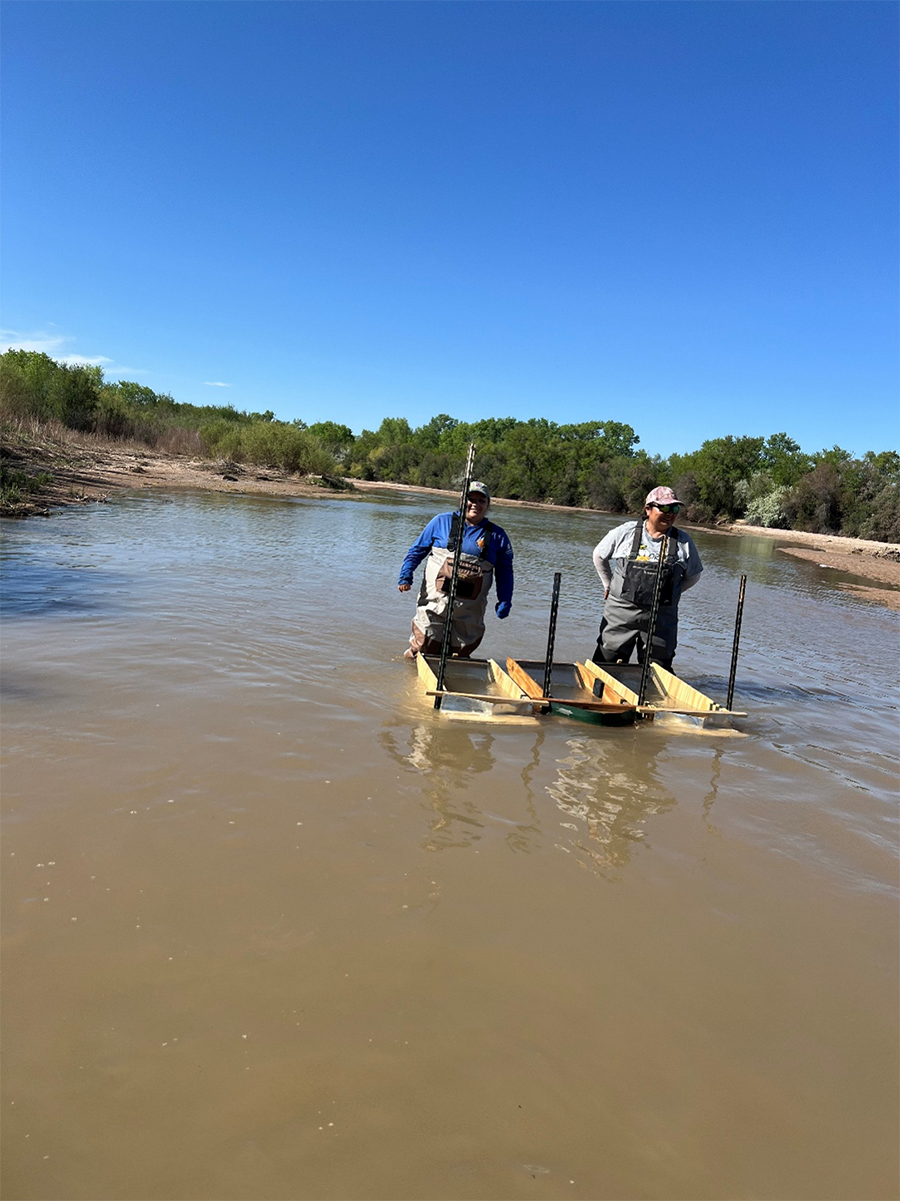
The interns worked alongside Lyle Thomas and Andy Dean who are fish and wildlife biologists from USFWS with prior experience in this work as well as with Reclamation biologists Shamarie Nez, Logan Gonzales, and Supervisory Biologist Eric Gonzales, contractors from American Southwest Ichthyological Researchers, LLC, and staff from the Albuquerque BioPark Zoo.
“This experience gave us a deeper understanding of the collaborative work involved in species conservation and the importance of adaptive water management in the Southwest,” said Bennett.
As a result of careful coordination between the groups, non-Pueblo irrigation water for this “jiggle” was released to create a pulse below the Isleta Diversion Dam. The release began on the morning of April 30 and concluded the following morning, May 1, with the estimated river flow during the event averaging around 400 cubic feet per second (cfs). Releases were increased to 100 cfs a few days prior and reduced to 40 cfs until May 5. Fortunately, rainstorms during the collection period also contributed to the river’s flow, enhancing the effectiveness of the effort.

The group used specially designed boxes lined with window screens to catch the eggs as they floated downstream. Using plastic spoons and cups, they carefully transferred the eggs from the screens. Once collected, the eggs were sent to various facilities for hatching and rearing into juvenile Rio Grande Silvery Minnow. They are also counted to monitor population trends and assess the effectiveness of conservation efforts. In this effort, around 55,000 eggs were collected.
The multi-agency coordination for the event, along with the dedication of the volunteers and staff, exemplify the value and impact of adaptive management in the Middle Rio Grande.
“Getting to participate in the jiggle was an amazing experience not only because I got to be a part of saving the Rio Grande Silvery Minnow, but because of the wealth of knowledge of the people we were working with,” said Padilla. “I got to learn about birds, hydrology, and different types of fish which have greatly guided my interests.”
Rocky Mountain Youth Corps Individual Placement Internships are designed to engage youth and young adults in valuable work experiences within natural resources management agencies and non-profits.
The interns have spent the last 9 months with Reclamation and will conclude their internship around the last week of December. Bennett and Padilla will spend the next 3 months with Reclamation and plan to use the experience they gain working with Bureau of Reclamation to further their career journeys.

Padilla said she is specifically interested in hydrology and the work that the hydrologists do at Reclamation.
“I have had such an enriching and positive experience working with Reclamation,” said Padilla. “The opportunities to learn and try new things have greatly impacted my future career goals.”
Bennett plans on finishing her bachelor’s degree in criminology next spring and Padilla is hoping to pursue permanent employment with Reclamation.
