


Lessons learned from previous operation put into action to disrupt downstream smallmouth bass population
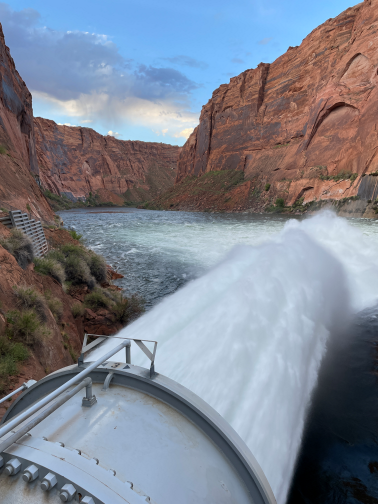 The cool mix releases will utilize Glen Canyon Dam’s bypass tubes which access a greater depth of water in Lake Powell, creating a colder flow of water downstream to disrupt the establishment of smallmouth bass. File Photo.
PAGE, ARIZ. – In response to rising river temperatures, the Bureau of Reclamation will implement the release of colder water from deeper in Lake Powell through Glen Canyon Dam. This proactive measure aims to disrupt the establishment of nonnative fish that pose a danger to the threatened humpback chub.
Currently, the trigger for releasing cooler water is three consecutive days of average river temperatures exceeding 60°F at river mile 30 below the dam. Reclamation initiated these flows on Aug. 3. However, due to changes in hydrology and observed river temperatures, these flows will be paused starting today, Aug.5. Cool mix flows will resume when the temperature trigger is again met.
This adaptive process builds on lessons learned from last year’s operations and aims to minimize the impacts to hydropower production.
“We’re encouraged by the early success of the program since its launch last year and remain committed to a comprehensive approach to controlling nonnative predatory species in the Colorado River,” said Reclamation Upper Colorado Region Regional Director Wayne Pullan. “With the recent completion of the 12-mile slough modifications and ongoing operational efforts, we’re building on that momentum to protect all native fish species in the Grand Canyon.”
The declining elevation of Lake Powell has led to the release of warmer water from Glen Canyon Dam. Invasive fish, such as smallmouth bass, residing in the upper layer of Lake Powell, are now more likely to pass through the dam and spawn downstream in the Grand Canyon. If left unchecked, their expanding population could pose a major threat to federally protected fish species such as the humpback chub. If they become established below the dam, control efforts would be difficult, expensive, and likely unsuccessful.
The ‘cool mix’ flows release water from the hydropower penstocks and the river outlet works, which are approximately 100 feet below the penstocks, and can release cooler water downstream. These releases do not affect the total volume of monthly and yearly releases from Glen Canyon Dam.
Last year’s operations cooled the river as far downstream as mile 60 but impacted hydropower production. To help mitigate the impacts, this year’s flows will cool the river to mile 30, the flows started later and will end sooner—no later than October 20. Combined with recent changes to the 12-mile slough, the adjusted flows are expected to help continue to reduce the smallmouth bass population while bypassing less than a quarter of the water bypassed last year.
“This approach builds upon lessons learned from last year’s flows. The Colorado River Basin states have expressed their support for implementing the flows this year, emphasizing the necessity of science-based early intervention to mitigate costly impacts in the future,” said Acting Reclamation Commissioner David Palumbo. “This flow alternative strikes a good balance between achieving biological objectives and reducing hydropower impacts.”
Additional immediate, near-term and long-term actions are underway or in development to help prevent the establishment of nonnative fish below Glen Canyon Dam. The planning and implementation of these actions are being coordinated between Reclamation and Department of the Interior bureaus such as National Park Service, U.S. Fish and Wildlife Service, and U.S. Geological Survey.
Reclamation continues to coordinate with the Western Area Power Administration on how to best mitigate the loss of hydropower during the cooler releases. Revenue received from the power generation at Glen Canyon Dam is deposited into the Basin Fund, which helps pay for the operation, maintenance, and replacement of critical infrastructure at the dam and other facilities that are part of the Colorado River Storage Project.
To learn more about the releases from Glen Canyon Dam and the Long-Term Experimental and Management Plan Final Supplemental Environmental Impact Statement, visit https://www.usbr.gov/uc/progact/amp/index.html.
