


Study encompasses Bartlett and Horseshoe reservoirs in the Verde River reservoir system
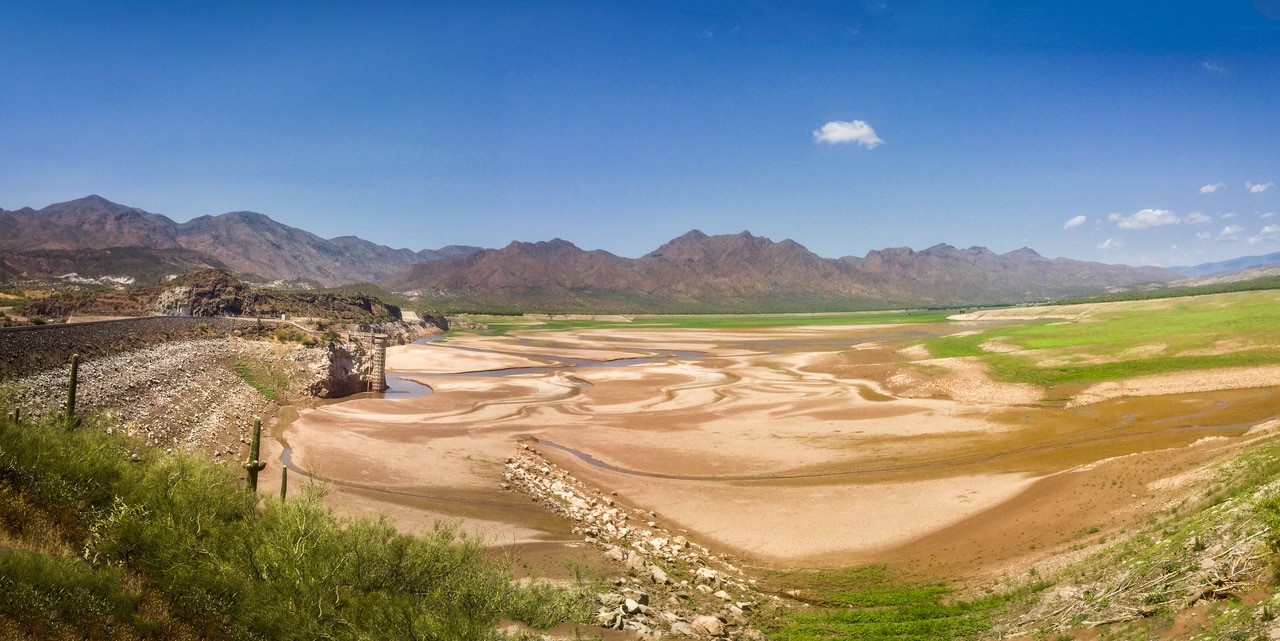 Sediment accumulation occurring behind Horseshoe Dam during the annual drawdown of the reservoir. Copyright Notice: This photo is copyrighted to SRP. All rights reserved. Please do not reproduce, distribute, or use this image without permission from SRP.
PHOENIX – The Bureau of Reclamation is beginning the preparation of an environmental impact statement under the National Environmental Policy Act for the Verde Reservoirs Sediment Mitigation Project. It is part of a feasibility study to examine options to restore lost storage capacity due to sediment accumulation, mitigate future sediment accumulation, and enhance storage and water management opportunities.
The Verde Reservoirs Sediment Mitigation Project is analyzing various strategies aimed at restoring lost capacity due to sedimentation at Horseshoe Reservoir. This initiative focuses on mitigating future sediment accumulation in the Verde River reservoir system while strengthening water supply resilience and reliability for the region.
Preliminary alternatives include:
- two new Bartlett Dam alternatives identified as viable for feasibility-level analysis in the Verde Reservoirs Sediment Mitigation Study appraisal report.
- at least one non-structural alternative.
- no action alternative
- other alternatives developed through the NEPA process.
Reclamation, as the lead federal agency, is coordinating with the Salt River Project as the primary non-federal cost-share partners. The U.S. Army Corps of Engineers, U.S. Fish and Wildlife Service, and U.S. Forest Service are federal agencies cooperating to ensure a comprehensive assessment of the project's environmental implications. The study was funded and authorized by the Infrastructure Investment and Jobs Act.
Reclamation is seeking public comments to identify significant issues, or effects to be addressed in the EIS and to identify relevant information, studies, or analyses. The public is also invited to provide input on potential alternatives. Reclamation is hosting two virtual and three in-person public scoping meetings to present an overview of the project and provide an opportunity for the public to ask questions and comment:
Monday, July 28: 5:30 p.m. to 7:30 p.m., Virtual, see Project website for registration details.
- Tuesday, July 29: 5:30 p.m. to 7:30 p.m., Fountain Hills Community Center, Fountain Hills, Arizona.
- Wednesday, July 30: 5:30 p.m. to 7:30 p.m., Escalante Multi-Generational Center, Tempe, Arizona.
- Thursday, July 31: 5:30 p.m. to 7:30 p.m., Carefree Hampton Inn, Carefree, Arizona.
- Friday, August 1: 12 p.m. to 2 p.m., Virtual, see Project website for registration details.
Written comments on the scope of the EIS will be accepted through close of business August 10, 2025, and should be submitted either through mail to the Bureau of Reclamation, (ATTN: VRSMP EIS), 6150 West Thunderbird Road, Glendale, Arizona, 85306; email to VRSMP@usbr.gov, or online through the project website.
This project illustrates the Department of the Interior’s and Bureau of Reclamation’s continued commitment to ensuring water security and promoting long-term sustainability in the Colorado River Basin, which supplies water to more than 40 million people, supports 5.5 million acres of farmland, 30 Tribal Nations, and two states in Mexico.
