

You are viewing ARCHIVED content published online before January 20, 2025. Please note that this content is NOT UPDATED, and links may not work. For current information, visit https://www.usbr.gov
By Shannon Hatch, Natural Resources Specialist, Western Colorado Area Office
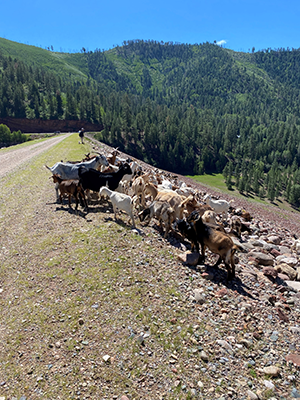
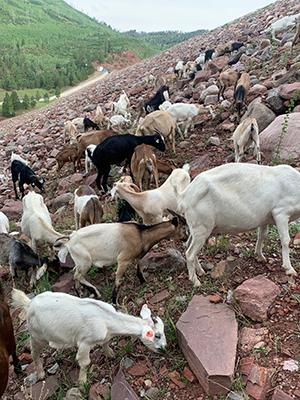
If you happened to drive by Lemon Dam recently, you may have done a double take and thought, does the face of the dam appear to be… moving?! For three weeks this July and August, you wouldn’t have been mistaken. Don’t worry, calls to Dam Safety aren’t in order.
The Florida Water Conservancy District, which operates the dam located north of Durango, Colorado, recently hired the services of nearly 200 ungulates from Cross A Ranch LLC to help control noxious weed species located within the primary jurisdiction area, which includes the steep rip rapped slopes on the up and downstream faces of the dam.
Patricia Ey, a District employee with forty-five years of service, who eschews herbicide usage and avidly promotes pollinator habitat, was looking for alternative means of weed control, especially in difficult to access areas. In the past, weeds were removed by the district used string trimmers, brush cutters, handpicking, and even experimentation with the use of biological control agents to keep weed populations in check.
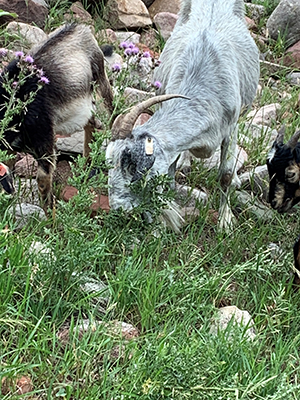
Cross A Ranch utilizes four-horned Jacob sheep and Spanish-Kiko hybrid goats for their weed control operations. These specially selected breeds are well equipped to handle rough terrain in arid conditions, and according to the ranch manager Jayson Archuletta, a veritable expert on livestock, these breeds will eat just about anything, including Canada thistle, mullein, cattails, and oak brush. The younger workers among the crowd quickly learn from nanny goats how best to approach spiny thistle and other challenging, yet tasty, treats. To whet their appetite, the goats and sheep were dry lotted (kept from grass and other vegetation) prior to their introduction to Lemon Reservoir.
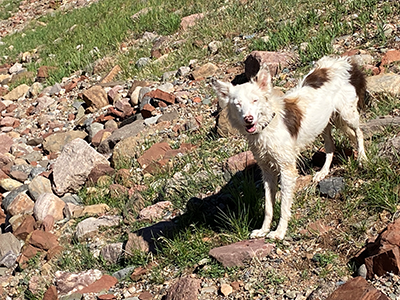
Archuletta remains on site with his herd for the duration of the contract to ensure the animals’ safety and, with the help of his working dogs, skillfully guides the animals to their next meal. Border collies are used to help herd the animals rather than guard dogs, which can be more aggressive, a trait Cross A Ranch would like to avoid as they often work in more urbanized areas.
Unlike chemical control or other mechanized means of weed abatement, the small ruminants help to fertilize the lands upon which they feast, working their droppings into the soil with their hooved feet. While there’s a chance a few weed seeds may remain viable after digestion, the majority are destroyed after mastication and the action of the animals’ four stomachs at work.
Since the District’s undertaking, interest has been piqued in using the goats and sheep for weed control work along the Florida Canal, as has their use for fire mitigation efforts in the area, a task they are well equipped to undertake.