


You are viewing ARCHIVED content published online before January 20, 2025. Please note that this content is NOT UPDATED, and links may not work. For current information, visit https://www.usbr.gov
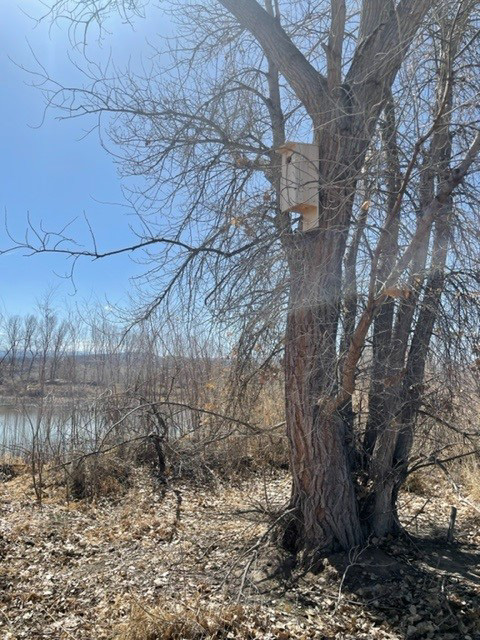 New wood duck boxes overlooking pond at the Grand Junction Wildlife Area
The Grand Junction Wildlife Area, located in Colorado, is owned and managed by Reclamation and is dedicated to the protection and maintenance of approximately 1,000 acres of wildlife habitat on mitigation properties. These lands are all located on the Colorado and Gunnison Rivers and have been replanted with native trees, shrubs, and grasses to encourage the establishment of native wildlife colonies and support migrating birds.
Wildlife Area volunteers Kathleen McGinley and Mike Henwood were at the wildlife area last month volunteering in a bird count survey with the Grand Valley Audubon Society when they noticed four pairs of wood ducks around a large pond starting to look for nesting cavities.
Wood ducks prefer shallow or slow-moving waters near woodlands and cannot dig their own nests, so they tend to nest in cavities of trees or man-made duck boxes, when available. Females wood ducks tend to come back to the same hatching site every year during the breeding season, along with their mates, so the availability of appropriate nesting areas is a key asset to help preserve and enhance wood duck populations and habitat.
McGinley and Henwood realized the need to install more duck boxes in the wildlife area for the upcoming nesting season and looked to local volunteer Bob Richardson, who offered to make new boxes and deliver them to Reclamation. The boxes were installed near the pond where they would have the most success in attracting the wood ducks and will now provide a safe place for the ducks to build their nests that is protected from the elements and predators. They were also installed just in time for the nesting season.
A large amount of planning goes into creating a successful wildlife area to attract a variety of wildlife. Reclamation staff at the wildlife area rotate food plots for the variety of species in the area and plant-specific varieties of vegetation to create a canopy to attract birds and ducks to the area. The large pond on site is monitored, and the water level is controlled year-round so adjustments can be made for seasonal needs and changes of waterfowl.
“The wood duck boxes are another tool in our bag to ensure permanently sustainable habitat for our wildlife. We are lucky to have a great group of volunteers that assist us in improving our wildlife areas,” said Kyle Alstatt, who manages the wildlife areas for Reclamation’s Western Colorado Area Office.
A special thanks to all of the volunteers at the Grand Junction Wildlife Area for helping mitigate these efforts and ensuring a safe and habitable place for wildlife.
