


You are viewing ARCHIVED content published online before January 20, 2025. Please note that this content is NOT UPDATED, and links may not work. For current information, visit https://www.usbr.gov
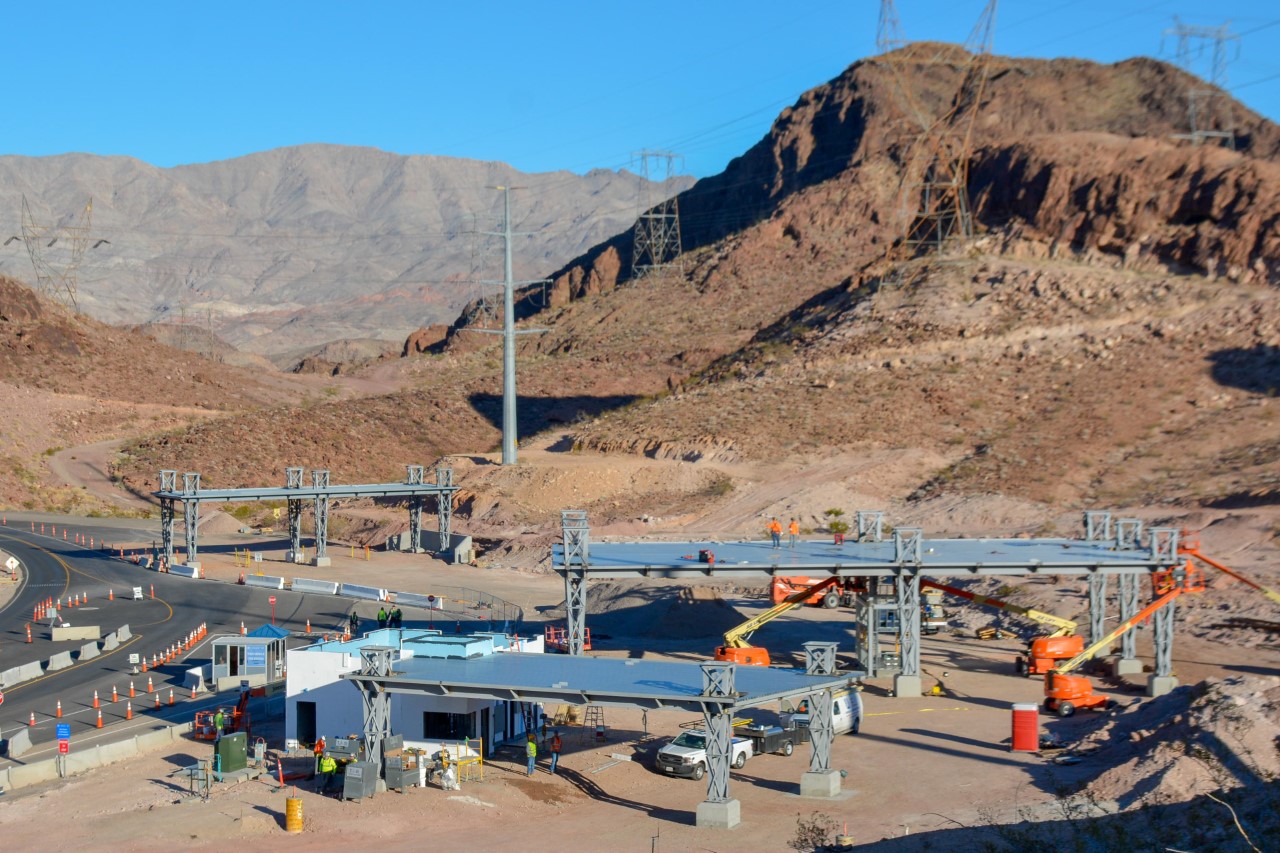 The new checkpoint includes a permanent security guard station and multiple entrance lanes.
Beginning with the development of new architectural designs in 2017, construction of the new Hoover Dam Security Checkpoint continues to progress. When completed in late-Summer 2022, the scenic, new security checkpoint will serve as the primary visitor entrance and vehicle gateway to Hoover Dam.
Constructing a more secure, and climate-controlled working-environment for the security guards and law enforcement personnel who protect the Dam 24-hours a day was a primary goal in constructing the new facility.
When completed, the new checkpoint will include large shade canopies, a permanent security guard station, an employee breakroom facility, new restrooms, and multiple entrance lanes designed to increase visitor flow and reduce vehicle wait times.
The design of the facility was inspired by the historical features located at Hoover Dam.
Following site security reviews after the September 11, 2001, terrorist attacks, Reclamation was directed by the Department of Homeland Security to institute additional security measures and screening technologies for cars and tour buses traveling to the Dam and surrounding grounds. Over the past two decades, the Dam’s security teams have been operating primarily out of portable offices and kiosks brought in by Reclamation, until the agency received funding and approval to construct a more permanent facility.
Prior to impacts from the COVID-19 pandemic, more than 1.2 million vehicles traveled to Hoover Dam each year. This resulted in approximately 6 million visitors annually, significantly more than was anticipated when the Dam was constructed.
The $8.7 million project is nearly 70% complete with most of the steel infrastructure and vehicle lanes now installed. Work on the facility is being performed in phases to maintain continuous operation of the existing checkpoint facility during construction.
